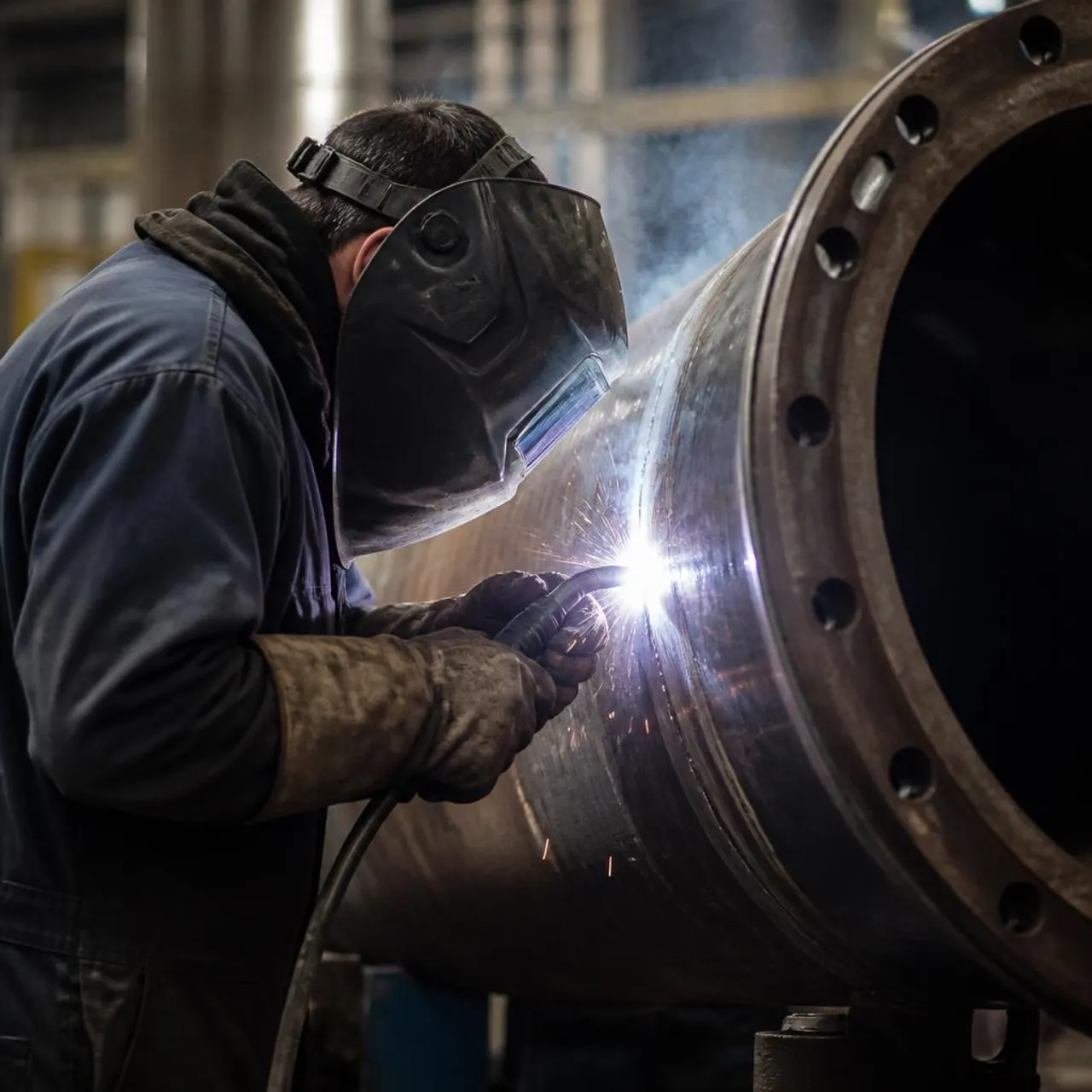
Pipe Welding
Pipe Welding for Repairs and New Runs
Pipe carries something that matters: water, air, process fluids, or structural loads. A weld on pipe has to join cleanly all the way around, which makes preparation and fit up as important as the welding itself.
Pipe welding in the field covers repairs on existing lines, modifications, and short new runs at facilities around Kansas City. The welder comes to the pipe, reviews the setup, and plans the joint before striking an arc.
Pipe welding in the field repairs cracked or corroded sections, adds flanges and tie-ins, and builds short new runs. You need it when a line leaks or must be modified. Cost depends on pipe size and material, what the line carries, access around it, joint preparation, and any code, drawing, or testing requirement.
The problem
What makes pipe work different
Pipe is welded in positions that are awkward, around corners, and close to walls and other lines. The welder often cannot rotate the work, so access and position decide how the joint is made.
Fit up matters too. Ends must be squared, aligned, and spaced correctly before welding, or the joint will be weak no matter how careful the bead.
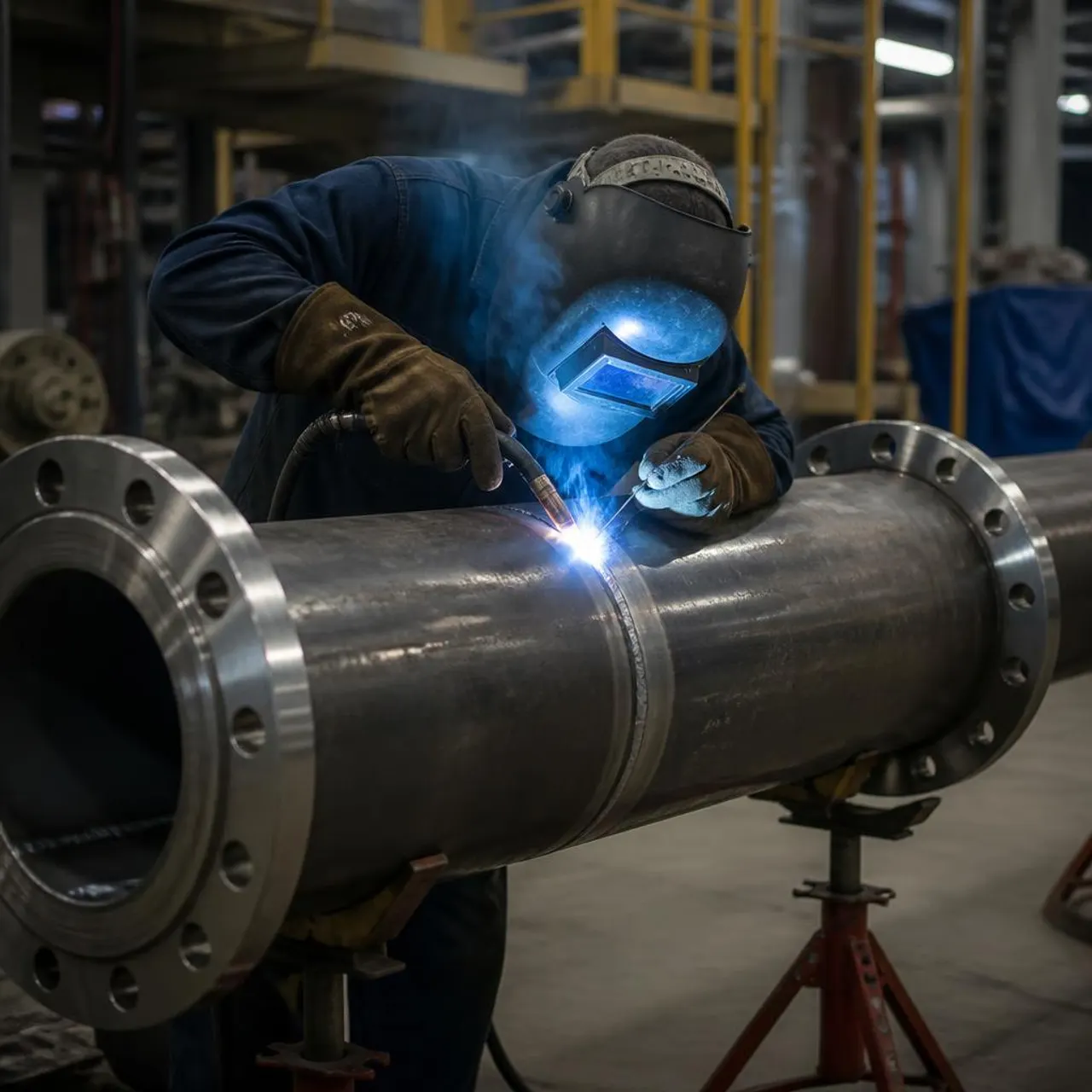
Scope
Pipe work that can be planned
These are the kinds of jobs this service covers. If your work is close to one of them but not exactly the same, describe it and the welder will tell you whether it fits.
Pipe repairs
Cracked, corroded, or damaged sections cut out and replaced.
Flange connections
Flanges welded onto pipe ends for bolted joints.
Modifications and tie ins
New branches and connections to existing lines.
Short new runs
Straight runs and simple layouts built to a measured plan.
Pipe supports
Hangers, brackets, and stands that hold lines in place.
Structural tube and pipe
Pipe used as railing, frames, and supports.
Process
How a pipe welding job proceeds
Four steps keep the work organized from the first message to the walk through.
Review the line
The welder confirms pipe size, material, what it carries, and any drawings or specifications.
Prepare the joint
Pipe is cut, cleaned, and fitted so the ends line up properly.
Weld the joint
The joint is welded in position, with attention to alignment as work proceeds.
Check and clean up
The welder inspects the weld visually and cleans the area. Any further testing you require is discussed in advance.
Specifications, testing, and what to tell us first
Some pipe has to meet a code, a drawing, or a customer specification. Tell us at the start what applies, and whether testing or inspection will be needed afterward. That information shapes the plan before the visit.
Also tell us what the line normally carries and whether it can be fully drained and cleaned. Welding on a line that held fuel, chemicals, or pressure needs careful preparation.
Access, supports, and clean working space
Good access shortens the job. Clear space around the pipe, a way to support both ends, and a safe place to set up make a real difference. If the pipe is overhead or in a tight rack, lifting and staging should be discussed before the visit.
Send photos of the area with your quote request. They show what the welder will be working around.
Questions
Questions about pipe welding
Short answers for this service. More general questions are on the FAQ page.
Can a leaking pipe be repaired in place?
Often a section can be cut out and replaced in place, depending on access and what the line carries. Describe the leak when you contact us.
What information is needed for pipe work?
Pipe size, material, what it carries, where it runs, and any drawings or specifications that apply.
What about testing after welding?
Tell us at the start if testing or inspection is required so it can be planned into the job.
Related services
Other services customers often need alongside this one
Jobs rarely fit one box. These related services share some of the same planning, and each has its own page.
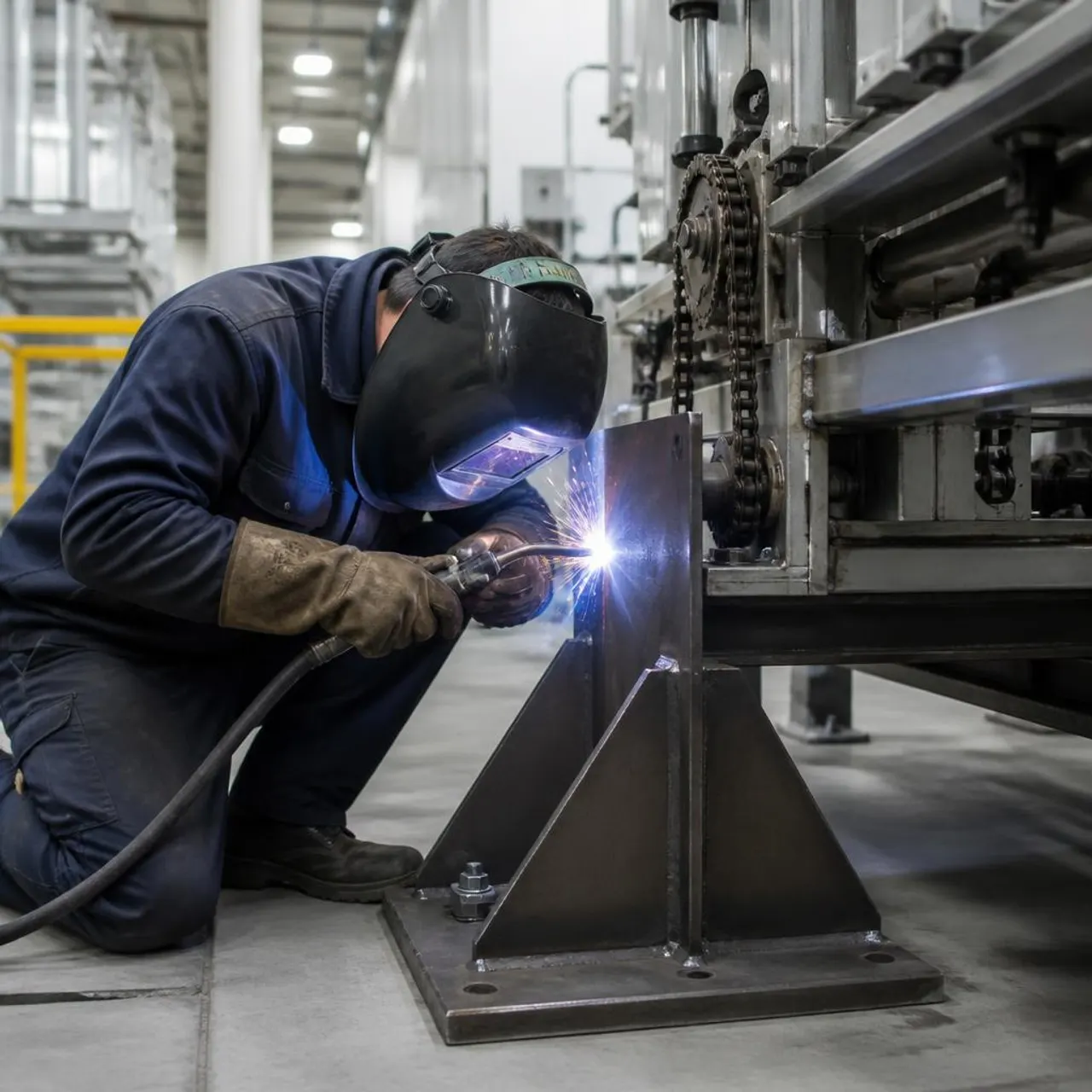
Industrial Machinery Welding
Repairs on frames, guards, conveyors, and fixtures inside plants and warehouses, planned around your production.
Explore Industrial Machinery Welding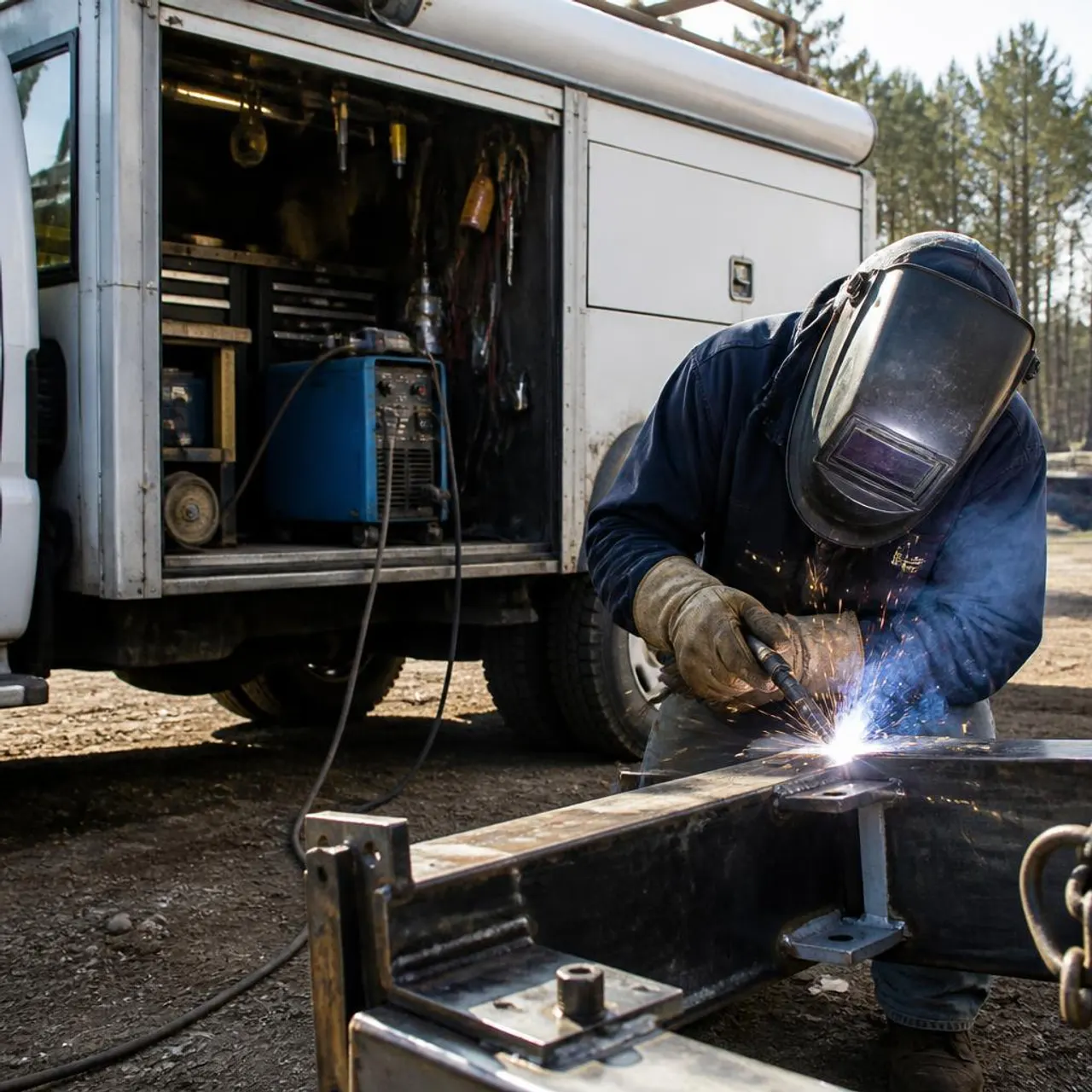
Mobile Welding
Repairs and fabrication performed at your yard, shop, or property, so the work stays where it is.
Explore Mobile Welding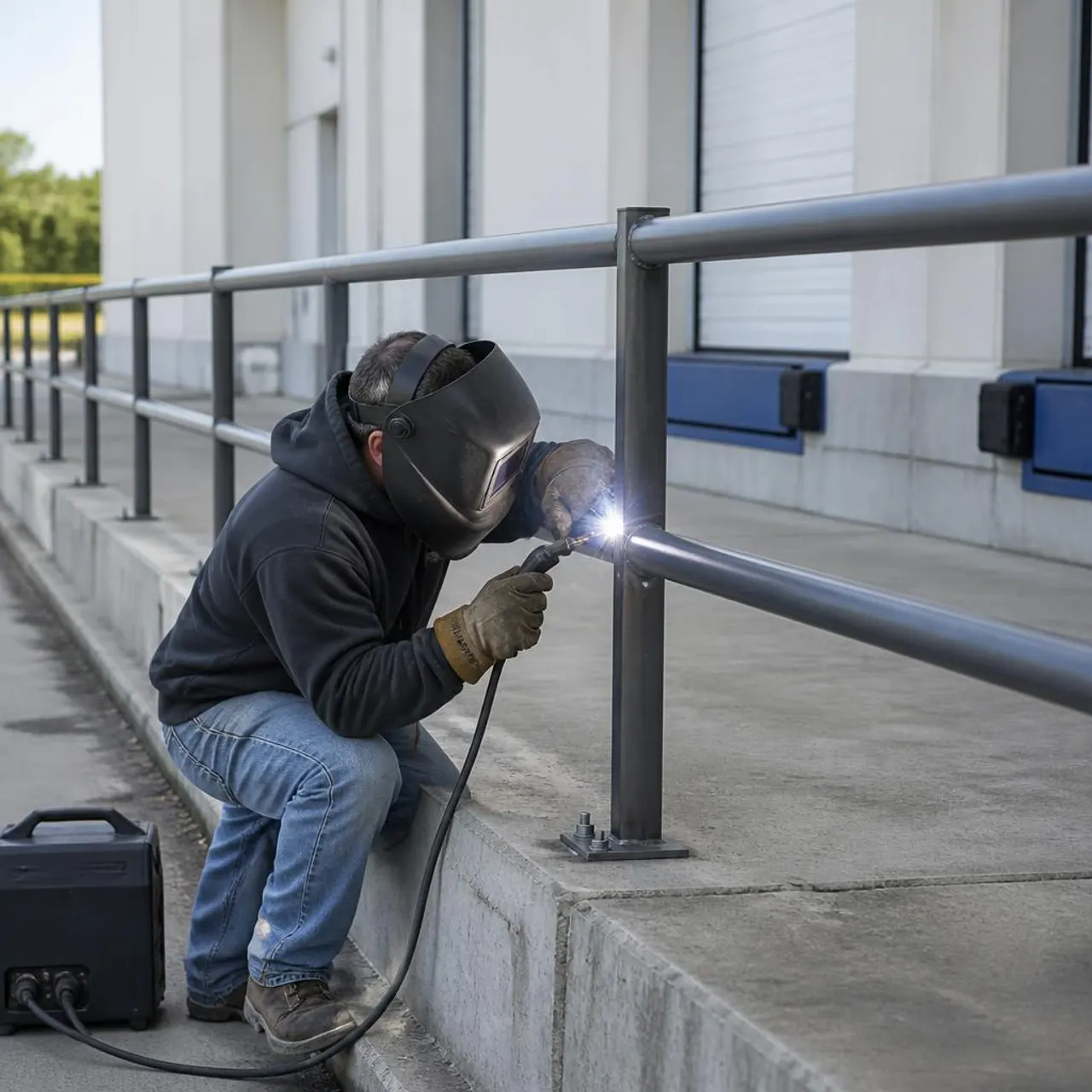
Commercial Property Welding
Handrails, gates, dock steel, bollards, and fencing repaired on location for property managers and facility teams.
Explore Commercial Property WeldingReady to talk about pipe welding?
Call us or request a quote and tell us what you need done.