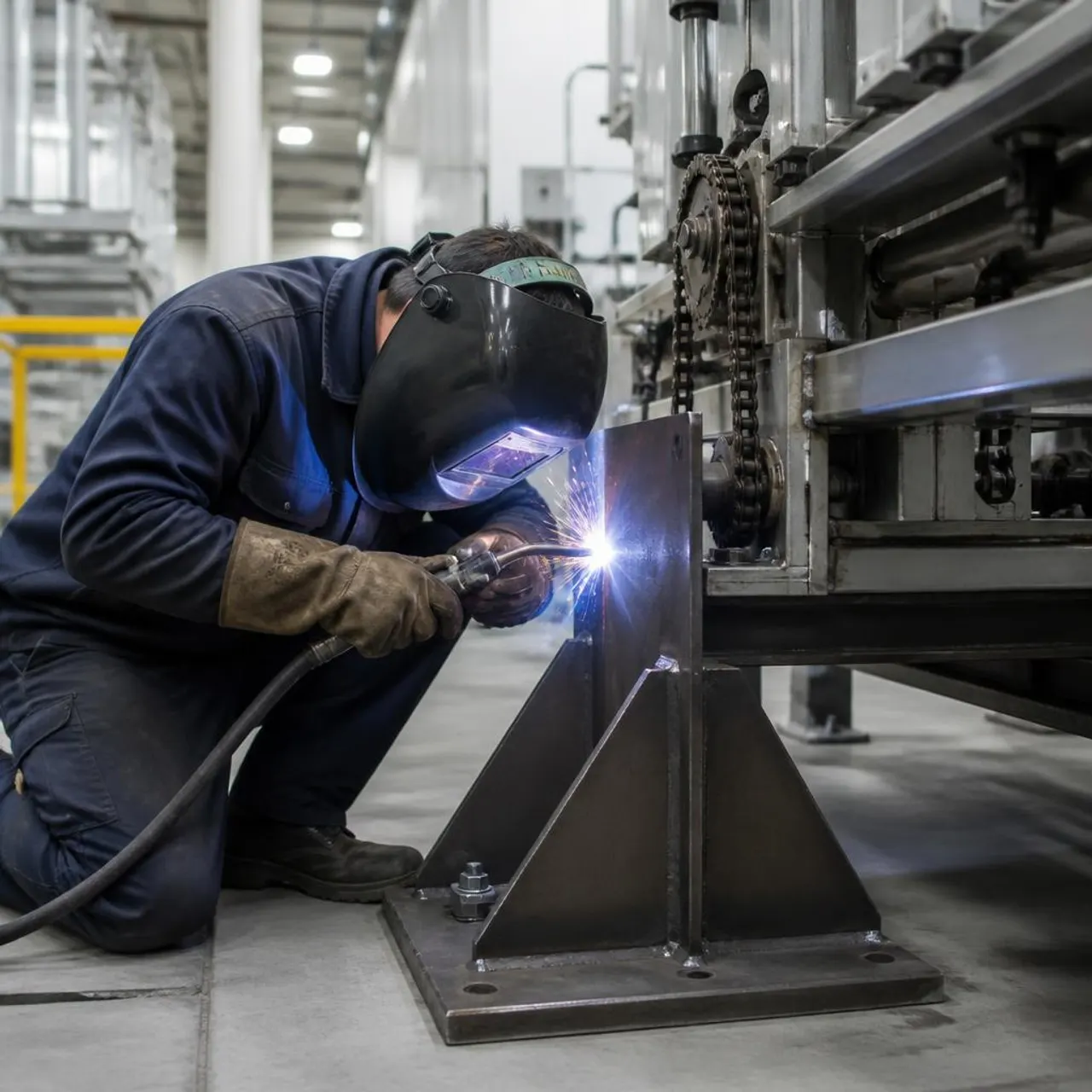
Industrial Machinery Welding
Industrial Machinery Welding for Working Plants
Production machinery earns its keep by running. When a frame cracks, a guard fails, or a conveyor support gives way, the line stops and every hour counts. Moving machinery to a welding shop is rarely an option, and often it is unnecessary.
Industrial machinery welding in the field brings the repair to the equipment inside your plant, warehouse, or yard. The work is planned around your schedule so production is disrupted as little as possible.
Industrial machinery welding repairs frames, guards, conveyor supports, and platforms with the equipment left in place. You need it when a crack or failed weld threatens safety or stops production. Cost depends on access around the machine, lockout and hot work requirements, the metal involved, shutdown timing, and any required procedure or inspection.
The problem
Repairing machinery that cannot leave the floor
Industrial equipment is often bolted down, plumbed in, wired, or simply too large to move. A repair has to happen with the machine in place, which means working around other equipment, people, and processes.
That takes planning. Before work starts, the welder needs to know what the machine does, what must be locked out, and what should be protected from sparks and heat.
Scope
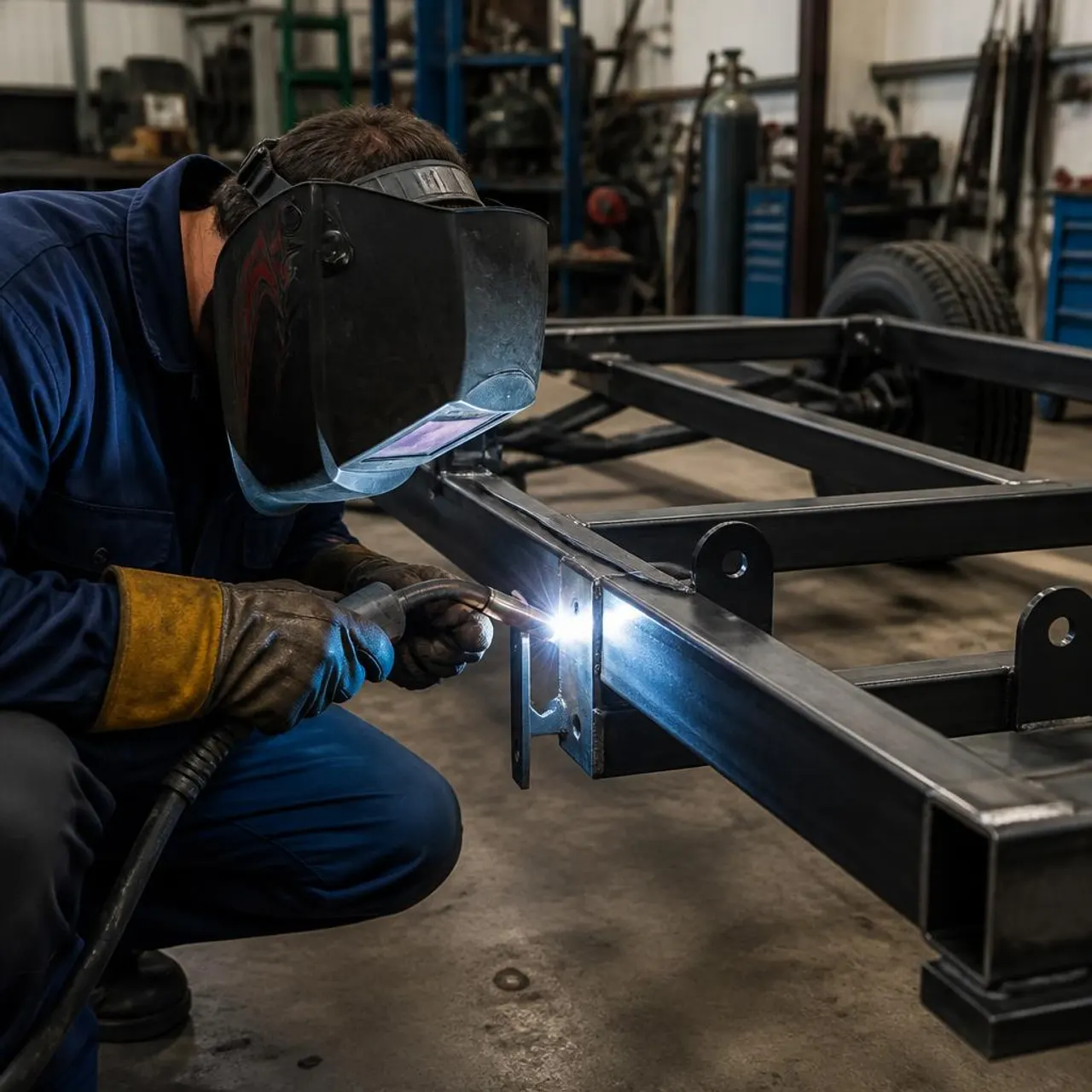
Machinery and structures welders repair
These are the kinds of jobs this service covers. If your work is close to one of them but not exactly the same, describe it and the welder will tell you whether it fits.
Machine frames and bases
Cracked welds and fatigued members in structural frames.
Guards and safety barriers
Machine guards, rails, and enclosures that protect operators.
Conveyor supports
Brackets, legs, and frames on material handling lines.
Hoppers and chutes
Worn or cracked steel in bulk handling equipment.
Platforms and stairs
Mezzanines, catwalks, ladders, and access steel.
Custom brackets and fixtures
Mounts and tooling made to fit measured locations.
Process
How a plant repair is approached
Four steps keep the work organized from the first message to the walk through.
Walk the problem
The welder learns what the machine does, where it failed, and what surrounds it.
Agree on safe conditions
Lockout, fire protection, ventilation, and access are settled before welding.
Weld in place
The repair is made with the machine where it stands.
Hand back clean
The area is cleared and the welder explains the repair so your team can restart with confidence.
Hot work and the rules of your facility
Many plants have their own hot work procedures, permits, and fire watch requirements. Tell us about them at the start so the visit follows your rules. Welding near dust, packaging, coatings, or chemicals demands extra care, and your safety team knows your building best.
If your job calls for a specific welding procedure or inspection, say so in your first message so the plan can account for it.
Scheduling around production
The best time for a repair is when it costs you the least. Some teams prefer a planned shutdown window, while others need a fix between shifts. Share your constraints so the visit can fit them where possible.
For repeated failures, a good repair also asks why the part broke. The welder can tell you what they see so you can decide whether a reinforcement is worth adding.
Questions
Questions about industrial machinery welding
Short answers for this service. More general questions are on the FAQ page.
Can welding happen while other equipment is running nearby?
That depends on the hazards and your facility rules. The welder plans the work with you so sparks, heat, and access are controlled.
Will the welder follow our site safety procedures?
Expect them to. Share your hot work and access requirements when you request the visit so they are part of the plan.
Is this only for large factories?
No. Small manufacturers, warehouses, and workshops around Kansas City have machinery that needs repair too.
Related services
Other services customers often need alongside this one
Jobs rarely fit one box. These related services share some of the same planning, and each has its own page.
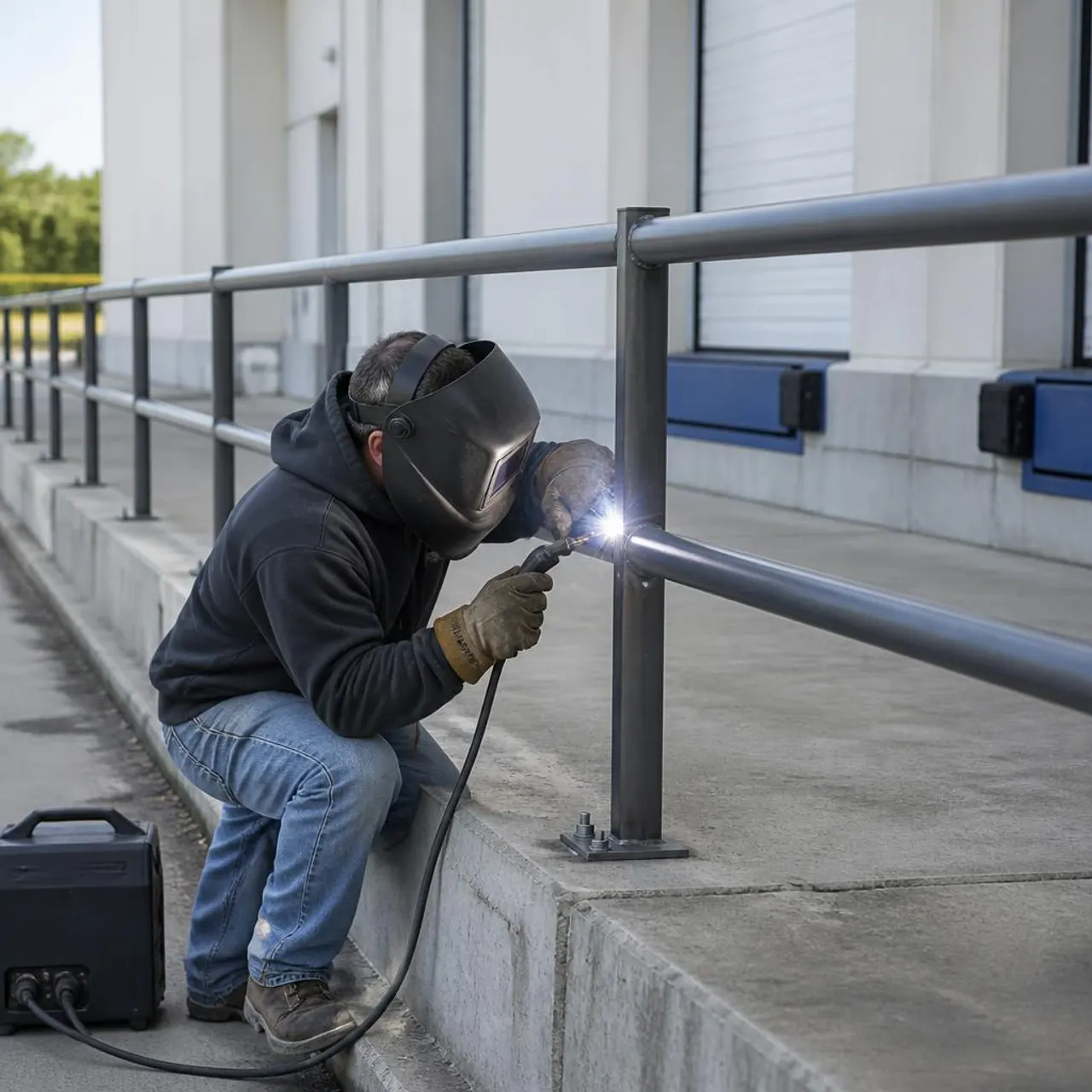
Commercial Property Welding
Handrails, gates, dock steel, bollards, and fencing repaired on location for property managers and facility teams.
Explore Commercial Property Welding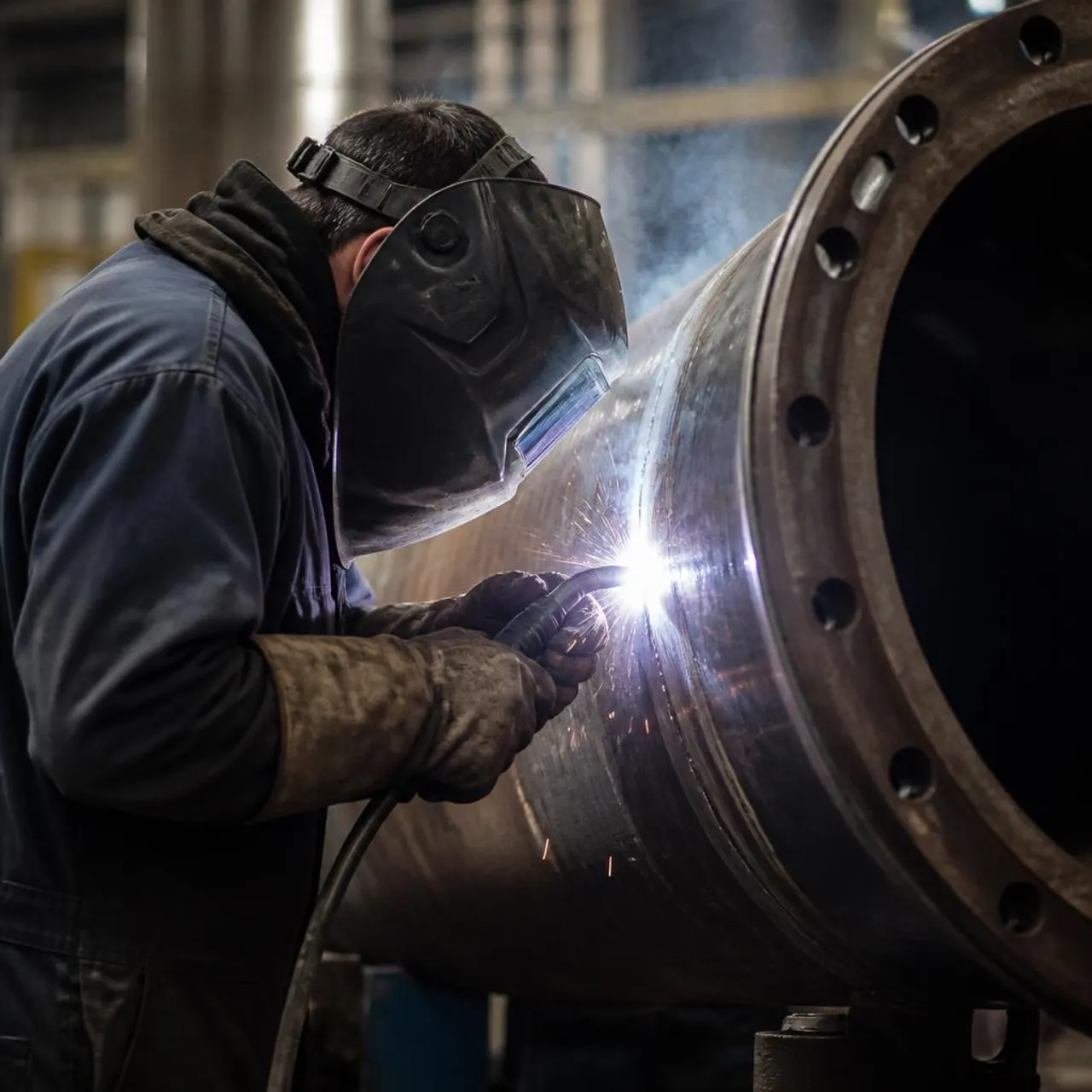
Pipe Welding
Pipe repairs, flange joints, and new runs welded at your facility with careful fit up and planning.
Explore Pipe Welding
Emergency Mobile Welding
Urgent field repairs for broken equipment, gates, and structural metal that cannot wait for a shop slot.
Explore Emergency Mobile WeldingReady to talk about industrial machinery welding?
Call us or request a quote and tell us what you need done.